
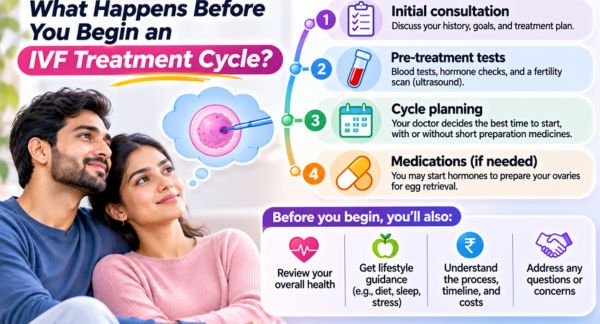
Before an IVF treatment cycle begins, your fertility specialist will usually review your medical and fertility history, assess ovarian function, check sperm health, and consider the uterus and fallopian tubes where needed. You may also have blood tests, ultrasound scans, ovarian reserve testing and other investigations based on your situation. Your doctor will then discuss the treatment plan, medicines, possible risks, expected costs and what you can expect during the cycle.
IVF Usually Starts Before the First Injection
When people talk about IVF, they often picture injections, egg retrieval and embryo transfer. Those are important parts of the process, but there is quite a bit that happens before the actual cycle begins.
You may have already spent months trying to conceive, had previous fertility treatment or received a diagnosis that brought you to IVF. By the time you book an appointment, you may simply want to know when treatment can start.
It is understandable to feel that way. Still, rushing into the first cycle is not usually the goal. Your fertility team needs enough information to decide whether IVF is appropriate, what treatment approach may suit you and whether anything needs to be addressed before medication starts.
If you are researching ivf treatment in Chennai, this preparation stage is worth paying attention to. It can determine how your cycle is planned and what your doctor expects from the treatment.
Your Fertility History Comes First
Your first consultation may involve a lot more conversation than you expected. Your doctor may ask how long you have been trying to conceive, whether you have had previous pregnancies, miscarriages or fertility treatments, and whether your periods are regular. You may also be asked about previous surgeries, endometriosis, PCOS, thyroid problems, medications and other health conditions.
Previous fertility reports are useful too. If you have already had an ultrasound, AMH test, HSG, semen analysis or earlier IVF or IUI treatment, take those records with you.
ASRM recommends a systematic fertility assessment that considers medical, reproductive and family history, age and previous fertility findings. When a male partner is contributing sperm, both partners should generally be evaluated rather than waiting until one side has completed testing. This history gives your specialist a starting point. It also means you may not need to repeat every test you have already completed.
Your Ovaries May Need a Closer Look
One of the main goals before IVF is to understand how your ovaries may respond to stimulation. IVF medication is used to encourage the ovaries to develop multiple follicles so that several eggs can potentially be collected. Your doctor therefore needs to consider factors such as age, previous response to fertility medication and ovarian reserve.
AMH, antral follicle count and, in some cases, FSH and estradiol may be used when assessing ovarian reserve. ASRM explains that ovarian reserve tests can help predict response to ovarian stimulation, but they should be interpreted alongside age and the rest of the clinical picture. They should not be treated as a simple test of whether pregnancy is possible.
An ultrasound may also give your doctor information about the ovaries, uterus and developing follicles. You may hear a lot about AMH when researching IVF. Try not to treat one number as a verdict on your fertility. Your specialist will look at the result in context.
Your Partner’s Fertility Matters Too
IVF involves both eggs and sperm, so the male partner’s fertility history should not be left until later. A semen analysis can provide information about sperm concentration, movement and other characteristics. If the results show a significant concern, your doctor may discuss whether conventional IVF, ICSI or another approach would be more appropriate.
ASRM recommends obtaining a reproductive and medical history and at least one semen analysis from the male partner at the beginning of an infertility evaluation when applicable.
This can also help avoid an unnecessary delay. If a couple has already decided to pursue IVF, finding a male fertility concern just before egg retrieval could change the laboratory plan. Knowing about it earlier gives the team time to discuss the available options.
The Uterus and Fallopian Tubes May Be Assessed
The uterus needs to be ready to receive an embryo, so your specialist may review the uterine cavity and surrounding reproductive anatomy before treatment. An ultrasound can help identify certain uterine or ovarian findings. Depending on your medical history, your doctor may recommend additional testing of the uterus or fallopian tubes.
Not everyone needs every test. ASRM recommends tailoring assessment of the reproductive tract and tubal status to the person’s medical history and risk factors. This is particularly relevant if you have a history of pelvic infection, previous surgery, endometriosis, abnormal bleeding or a known reproductive condition.
The purpose of these investigations is practical. If something needs treatment or further evaluation before embryo transfer, it is better to know before the IVF cycle reaches that stage.
You May Have Blood Tests Before Treatment
Blood tests can form part of the preparation process, although the exact tests vary between patients and clinics. Your doctor may request hormone testing, ovarian reserve tests or other investigations based on your medical history. Some clinics also perform health screening before treatment.
The tests are not simply a checklist that every IVF patient receives. Your fertility team decides what is relevant to your situation. If you already have recent reports, bring them to the appointment. It can save time and may prevent unnecessary repeat testing.
Your Medication Plan Is Explained Before You Start
IVF medication can feel intimidating when you first hear about it. There may be several medicines, different doses and specific instructions about when to take them. Before the cycle starts, your clinic should explain what each medicine is for and how it should be taken. You may also be told when monitoring appointments will happen and what signs should prompt you to contact the clinic.
During an IVF cycle, the ovaries are monitored as they respond to stimulation. HFEA describes monitoring with ultrasound scans and, where appropriate, blood tests during ovarian stimulation.
Your medication plan can also change depending on how your ovaries respond. That does not necessarily mean that something has gone wrong. Fertility treatment often needs to be adjusted according to what happens during the cycle.
Your Doctor Will Discuss the IVF Plan
Once the assessment is complete, your specialist can explain how your IVF cycle is likely to be organised. This may include the stimulation medicines, monitoring appointments, egg retrieval, fertilisation, embryo development and embryo transfer. If ICSI may be appropriate, that should also be discussed before the laboratory stage.
ACOG explains that IVF is carried out in cycles. Eggs are stimulated and collected, fertilised with sperm in the laboratory and monitored as embryos develop before an embryo is transferred to the uterus. You should also be able to ask what happens if the ovaries respond differently from expected, if fewer eggs are collected or if there are embryos that can be frozen for later use. Knowing the possible variations beforehand can make the process feel less unfamiliar.
The Cost Should Be Clear Before Treatment
Cost is understandably one of the biggest concerns when couples start looking into IVF. If you are searching for ivf cost in chennai or ivf treatment cost in chennai, do not compare clinics only by the first package price you see online.
Ask what the quoted amount includes. Depending on the clinic and treatment plan, costs may involve consultations, scans, medication, egg retrieval, laboratory procedures, embryo culture, transfer and embryo freezing. Additional procedures may have separate charges.
The HFEA recommends asking clinics for a breakdown of treatment costs and finding out what other expenses may arise. A clear estimate can make it easier to plan financially and avoid confusion later.
Choosing the Right IVF Team
Searching for the best ivf doctor in chennai or best ivf hospital in chennai is often one of the first things couples do after deciding to explore treatment. Online research can help you make a shortlist, but a consultation tells you something that a website cannot.
Does the doctor explain why IVF has been recommended? Do they discuss other options when appropriate? Are your previous reports actually reviewed? Can you ask questions without feeling rushed?
The same applies when comparing the best ivf centre in chennai or looking for the best hospital for ivf treatment in chennai. IVF involves clinical care and laboratory work, so it is worth looking at the complete treatment setup rather than focusing on one advertised number. If you are researching the best ivf specialist in Chennai, consider how clearly the fertility team communicates with you as well as their qualifications and experience.
You Do Not Have to Decide Everything in One Visit
A first IVF consultation can leave you with a lot to think about. You may hear about tests you have not had before, different medication options, embryo freezing, laboratory procedures and costs. It is normal to need time to process all of that.
Write down your questions before the appointment. You could ask why IVF is being recommended, whether another treatment may be suitable, what tests are still required and what the expected timeline looks like.
You can also ask what would happen if the first cycle does not result in pregnancy. Knowing that there is a plan for different outcomes can make the decision easier. If you are comparing the best ivf in chennai, this kind of conversation may tell you more about the quality of care you can expect than a ranking alone.
Your Health Before IVF Matters
The preparation period is also a good time to discuss your general health. Tell your doctor about any medicines, supplements or health conditions you have. Conditions such as thyroid disorders, diabetes, high blood pressure or PCOS may need attention before or during fertility treatment.
Lifestyle can also come into the conversation. Your doctor may discuss smoking, alcohol, exercise, nutrition, sleep and other factors that could affect your health during treatment. ASRM recommends that fertility evaluation should also provide an opportunity to address relevant pre pregnancy health concerns and optimize care before pregnancy.
You do not need to make every change overnight. The useful step is to have an honest conversation with your fertility team about what applies to you.
There Is an Emotional Side to Preparation Too
The medical preparation is only part of getting ready for IVF. You may feel excited about finally having a treatment option while also worrying about injections, procedures, costs or the possibility that treatment may not work. You may even feel unsure about starting after spending so much time trying to conceive naturally.
Those feelings are normal. Talk to your partner about what each of you expects from the process. Decide who you can turn to when appointments become stressful. If your clinic offers counselling or emotional support, ask what is available.
HFEA recommends asking clinics about counselling and support services before treatment, as fertility treatment can bring physical and emotional challenges. Taking care of this side of the process does not mean you are expecting treatment to fail. It simply gives you another form of support while you go through it.
What You Should Know Before the First Day
By the time your IVF cycle begins, you should have a reasonable idea of what is going to happen. You should know which medicines you are taking, when monitoring appointments are scheduled and who to contact if you have a concern. You should also understand what happens during egg retrieval and what the laboratory team will do with the eggs and sperm.
Ask about embryo transfer timing as well. Depending on embryo development and your treatment plan, transfer may take place after fertilisation and embryo culture, while suitable embryos may also be frozen for later use. You do not need to memorise every medical term. You simply need enough information to feel comfortable asking questions when something is unclear.
Conclusion
The IVF cycle does not really begin with the first injection. It starts with the assessment, conversations and decisions that happen beforehand.
Your fertility history, ovarian reserve, sperm health, uterine and tubal findings, medical conditions and previous treatment can all influence the plan. Your doctor will use this information to decide how to approach stimulation, monitoring and the laboratory side of treatment.
If you are researching IVF treatment in Chennai, take some time to understand what happens before treatment starts. Ask about the tests you need, the medicines you may use, the expected costs and the options available if the first plan needs to change.
At Shairaksha Fertility Centre, the preparation stage can help you understand your fertility findings and what the proposed IVF plan involves before you begin treatment.
If IVF is something you are considering, book a consultation with Shairaksha Fertility Centre and have your questions ready for the first conversation.
Frequently Asked Questions
What tests are needed before an IVF cycle?
The tests depend on your medical and fertility history. They may include blood tests, ovarian reserve assessment, ultrasound, semen analysis and assessment of the uterus or fallopian tubes when indicated.
Do both partners need to be assessed before IVF?
When a male partner is contributing sperm, evaluation of both partners is generally recommended. A semen analysis is an important part of the male fertility assessment.
How long does IVF preparation take?
There is no single preparation period for everyone. Some patients may already have completed much of their fertility testing, while others need additional investigations before treatment can begin.
Does AMH determine whether IVF will work?
No. AMH can help estimate how the ovaries may respond to stimulation, but it does not by itself predict whether you will become pregnant. Age and the wider fertility picture also matter.
What should I ask before starting IVF?
Ask why IVF is being recommended, which tests are still needed, what medicines you will take, how monitoring will work, what the treatment is expected to cost and what alternatives or next steps may be available.
Can the IVF treatment plan change after it starts?
Yes. Medication doses and timing may be adjusted according to how your ovaries respond during monitoring. Your fertility team should explain any changes and why they are needed.
What should I know about IVF costs in Chennai?
Ask for a detailed treatment estimate and check what is included. Medication, scans, laboratory procedures, embryo freezing and other services may be handled differently between clinics.