
Could IUI Be Suitable When Ovulation Is Irregular for You?
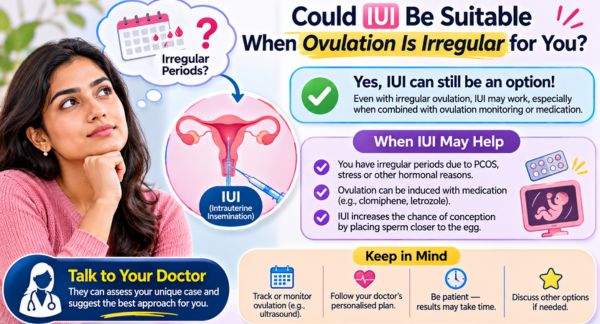
IUI may be suitable for some women with irregular ovulation when the cause of the problem can be treated and ovulation can be monitored or timed.
What Happens Before You Begin an IVF Treatment Cycle?
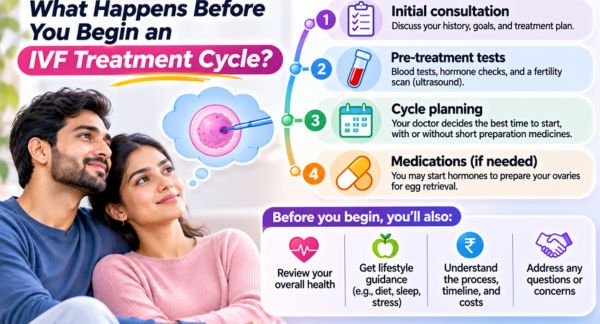
Before an IVF treatment cycle begins, your fertility specialist will usually review your medical and fertility history, assess ovarian function, check sperm health, and consider the uterus and fallopian tubes where needed.
Can PCOS Affect Fertility Even With Regular Periods?
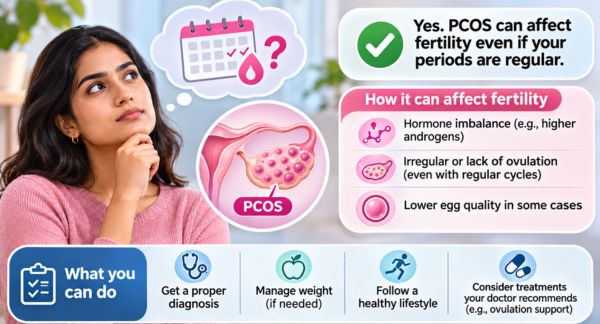
Yes, PCOS can affect fertility even when periods appear regular. Regular bleeding does not always confirm that ovulation is happening consistently.
When Should You Seek Medical Help for Delayed Conception?
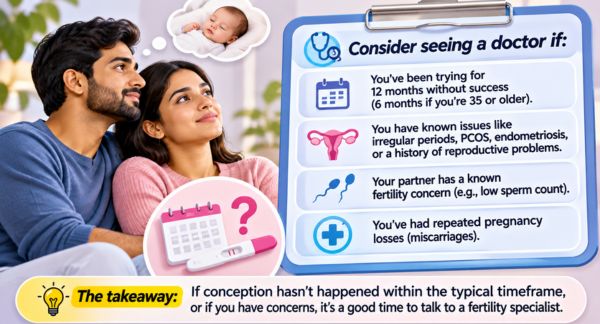
You should consider medical help for delayed conception after 12 months of regular unprotected intercourse if you are under 35, or after 6 months if you are 35 or older. Women over 40 may benefit from an earlier fertility evaluation.
How Can You Prepare for Your First IVF Consultation?

Preparing for your first IVF consultation can make the appointment more useful and less overwhelming. Bring previous fertility reports, a list of medicines and supplements, details about your menstrual and reproductive history, and any questions you have. Your specialist will review your history, discuss relevant tests, and explain whether IVF or another fertility option may suit your situation.
How Can a Gynaecologist Help With Fertility Concerns?

A gynaecologist can help identify fertility concerns by reviewing menstrual cycles, ovulation, reproductive health, medical history, and conditions that may affect conception. They can recommend appropriate tests, manage conditions such as PCOS or hormonal problems, assess the uterus and fallopian tubes, and guide you towards fertility treatment when needed. If the situation requires specialised care, they can also refer you to a fertility specialist.
When IVF Becomes an Option, What Should You Know First?
IVF may become an option when pregnancy has not occurred despite other treatments, when the fallopian tubes are blocked or damaged, when there are significant sperm related concerns, or when other fertility factors make IVF more suitable. The decision depends on age, fertility history, test results, ovarian reserve, sperm health, and previous treatment. IVF is not automatically the next step for everyone, so a proper fertility evaluation should come first.
When Should Men Consider a Fertility Assessment?

Men should consider a fertility assessment when pregnancy has not occurred after the recommended period of trying, when there are known reproductive or medical concerns, or when a couple has experienced repeated pregnancy loss or unsuccessful fertility treatment. A male fertility assessment usually begins with a reproductive history and semen analysis. Earlier evaluation may help identify treatable concerns and guide the right fertility care.
How Personalized IVF Care Can Change Your Treatment Journey

Personalized IVF care focuses on creating a treatment plan based on each couple’s fertility needs, medical history, age, test results, and treatment response. Instead of following the same approach for everyone, fertility specialists adjust the treatment process to improve care quality, provide better guidance, and support couples throughout their fertility journey.
How ICSI Helps When Fertilisation Becomes Difficult

ICSI helps couples facing fertilisation challenges by allowing an embryologist to inject a single selected sperm directly into a mature egg. It is commonly used when sperm-related factors affect fertilisation or when previous IVF attempts have resulted in poor fertilisation. The suitability of ICSI depends on individual fertility factors, medical history, and treatment evaluation.